Cybeauty began in March 2024 as an issue-led publication focused on AI-generated models and the early culture forming around AI influencers. Over the following year, the team produced 12 PDF issues. The PDF line ended in March 2025, yet the brand did not close. Its operating model changed.
The original product was a magazine issue. The newer asset is a media property: a premium retro-future publication supported by a searchable editorial site, an archive, repeatable content formats, social distribution, and a growing body of owned intellectual property.
The distinction matters. A publication can release strong editorial work and still reset much of its effort with every issue. A media property gives that work a longer life, creates more entry points for readers, and builds assets that can compound across search, audience, brand recognition, and commercial relationships.
The issue-led model reached its limit
The first version of Cybeauty followed a familiar magazine rhythm. Each issue required a new visual concept, editorial package, layout, release cycle, and promotional push. The result felt complete as a product, but most of the attention concentrated around the launch window.
That model created three operational limits:
- Each release restarted distribution. An issue needed its own launch effort, even when earlier material remained relevant.
- The archive was difficult to discover. A PDF can preserve editorial work, but individual stories have fewer search entry points than web pages built around clear topics.
- Production cadence shaped editorial choices. The need to complete the next issue could take priority over publishing the strongest available story at the right time.
The problem was not the magazine format itself. The problem was treating the issue as the entire business rather than one part of a wider editorial system.
A media property is more than a magazine
A media property combines editorial identity with systems that preserve, distribute, and increase the value of the work over time. It gives readers several ways to discover the brand and gives the operator several assets to develop.
Editorial archive
Articles, rankings, profiles, reviews, and legacy issues remain available as a structured body of work rather than disappearing after a release cycle.
Search discovery
Each article can answer a defined question, rank for a topic, earn links, and become a source that search systems can retrieve later.
Distribution network
Social channels introduce stories and personalities to readers, then direct attention back to the canonical editorial property.
Brand and intellectual property
The name, visual system, archive, rankings, editorial formats, audience relationships, and associated digital personalities form reusable assets.
Cybeauty still needs the editorial discipline of a magazine. The shift does not turn it into a generic content site. It changes how the magazine is stored, found, distributed, and developed.
What Cybeauty kept
The editorial identity remains central. Cybeauty is being rebuilt as a premium retro-future magazine rather than a general AI news site. Its visual direction draws from classic futurism, late twentieth-century technology publishing, synthetic beauty, and the polished optimism of imagined digital futures.
The subject remains equally focused. Cybeauty covers the people, aesthetics, tools, and commercial activity surrounding AI-native visual culture. The core editorial areas are:
- Rankings of notable and fast-growing AI influencers.
- Profiles of digital personalities and the creators or studios behind them.
- Analysis of AI culture, synthetic identity, creator economics, and online visual trends.
- Reviews of relevant AI tools and apps used for image creation, video, character development, publishing, and creator operations.
- Selected news when it changes how AI creators build, distribute, or commercialize their work.
- Creator interviews as a future editorial format once the relaunch has a stable publishing system.
Editorial Position
Cybeauty remains a magazine. The media-property model gives the magazine a stronger archive, clearer distribution, and a longer commercial life.
What changed in the operating model
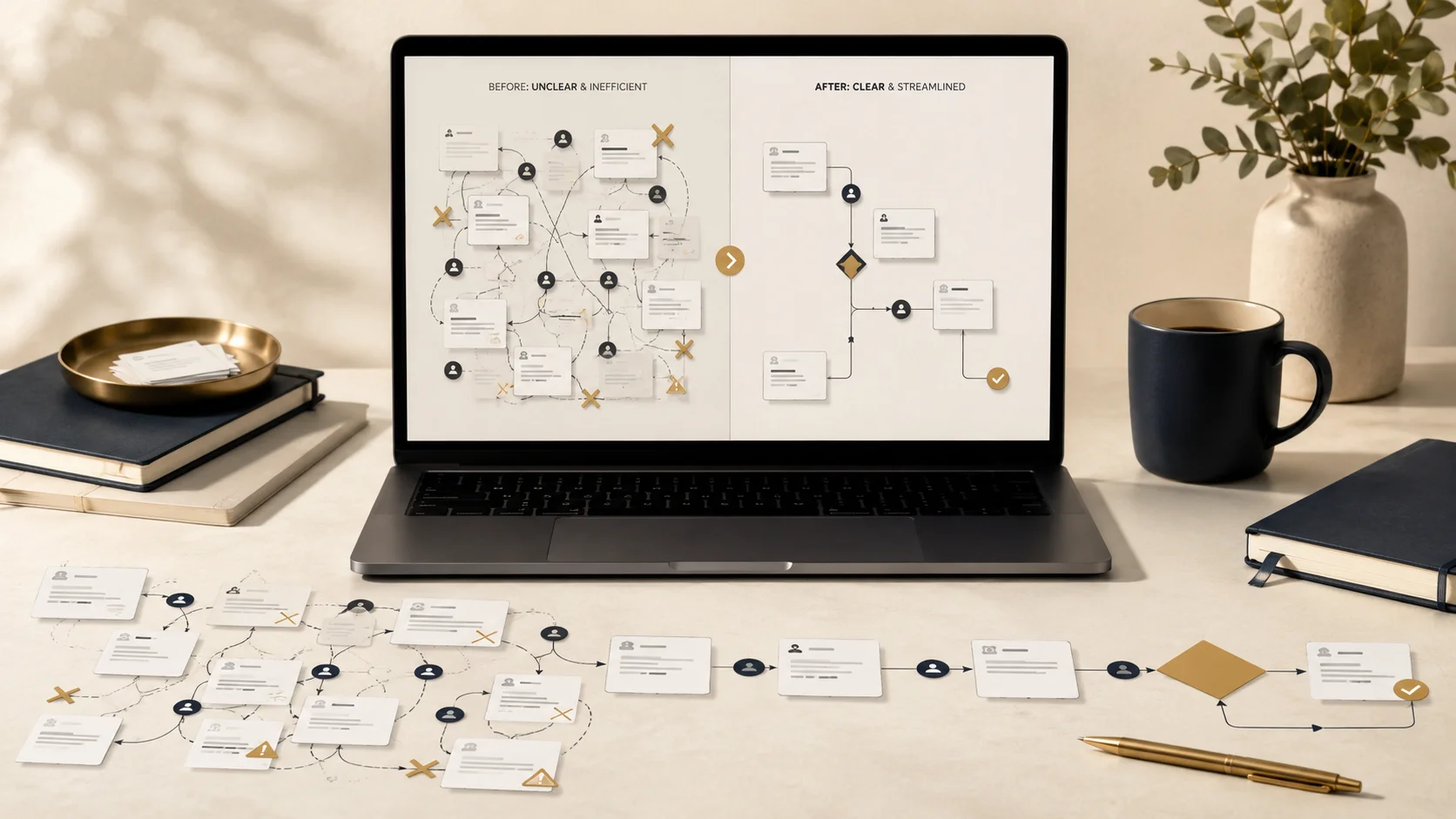
The strongest change was moving from a release calendar to a library model. A library model treats every useful article as part of a connected editorial asset.
- Web pages became the primary editorial unit. Rankings, reviews, profiles, and analysis can be indexed separately and updated when the subject changes.
- The PDF catalog became an archive. The 12 legacy issues retain historical and visual value without dictating the current publishing schedule.
- Topics became editorial franchises. A ranking can return each year. A tool category can support several reviews. A cultural shift can connect news, analysis, and profiles.
- Social accounts became distribution channels. Their role is to surface editorial work, attract attention, and introduce the brand to new readers.
- Publishing frequency became selective. Cybeauty does not need daily volume. It needs articles with a clear purpose, credible information, and enough value to remain useful after publication.
This structure supports slower publishing without making the property inactive. A strong ranking, reference page, or case study can continue to bring readers long after the publication date.
Search became part of distribution
A web-first magazine gains a distribution channel that a closed issue cannot provide at the same level. Readers can arrive through a search for a named AI influencer, a ranking, a tool review, or a question about AI creator culture.
Search visibility depends on editorial clarity rather than keyword volume. Each article needs a defined subject, an accurate title, named entities, dates, authorship, descriptive images, internal links, and direct answers to the questions implied by the topic.
The same structure helps AI search systems interpret the archive. A page that clearly states who or what it covers, how the information was selected, when it was updated, and which sources support it is easier to retrieve and cite than an article built around vague commentary.
This does not require Cybeauty to flatten its voice. The retro-future visual identity and editorial perspective can remain distinct. Search architecture handles discovery; the magazine identity gives readers a reason to remember the source.
Social reach became a feeder, not the property
Cybeauty developed several social distribution accounts around AI influencers and creator culture. By mid-2026, the connected Cybeauty Instagram accounts had grown beyond 120,000 followers, and the main website had reached roughly 21,000 monthly organic visitors.
Those figures showed that the brand could attract attention across more than one channel. They also exposed a structural risk: a social account can provide reach without creating durable ownership. Algorithms, recommendation status, platform rules, and account restrictions can change without notice.
The website serves a different role. It is the canonical home for articles, rankings, archive pages, author records, newsletter signups, and commercial information. Social platforms can introduce the work. The website preserves it.
Operating Principle
Rented distribution can grow the audience. The owned editorial property must keep the archive, reader relationship, and definitive version of the work.
Repeatable editorial formats create stronger assets
A media property becomes easier to operate when it has formats that can return without feeling repetitive. Cybeauty can build recognition around a small number of recurring editorial products.
- AI influencer rankings can become dated reference pages with transparent selection criteria and scheduled updates.
- Creator and character profiles can document identity, production methods, audience, positioning, and commercial activity.
- AI tool and app reviews can assess use cases, output quality, pricing, limitations, licensing, and suitability for creator workflows.
- Culture analysis can examine how synthetic beauty, digital identity, platform behavior, and creator economics are changing.
- Archive features can connect current developments with the visual and editorial history recorded in the original issues.
- Interviews can add primary reporting once the editorial schedule supports consistent preparation and follow-up.
These formats give search engines, readers, potential partners, and AI systems a clearer idea of what Cybeauty covers. They give the editorial team a repeatable standard for research and production.
A wider asset creates more commercial options
The original magazine relied on the issue as the main product. A media property can support several revenue paths without turning every article into a sales page.
Possible models include sponsorship around defined editorial franchises, selected affiliate relationships for reviewed tools, premium access to the legacy archive, licensing of original editorial or visual assets, research partnerships, and commercial collaborations that fit the publication’s audience.
Each model needs a clear separation between editorial judgment and paid placement. Rankings lose value when positions can be bought. Reviews lose value when limitations are hidden. The commercial model must preserve the credibility that makes the media property useful.
Lessons from the transition
- A format should serve the asset, not define its limits.
- An archive needs structure before it can create long-term value.
- Search discovery works best with clear entities and direct editorial purpose.
- Social reach is useful, but the canonical property should remain owned.
- Recurring formats reduce production uncertainty and build recognition.
- Selective publishing can produce a stronger library than constant output.
- A distinct visual identity can remain consistent across several content formats.
- Commercial options depend on editorial trust, audience fit, and documented ownership.
Cybeauty did not stop being a publication. It stopped treating publication as a single recurring file. The magazine became one layer inside a broader digital media asset.
The magazine remains the center of the property
The next version of Cybeauty is still editorial at its core: a premium retro-future magazine covering AI influencers, AI culture, digital identity, and the tools shaping creator work.
The difference is structural. Articles can be found individually. Rankings can be updated. Reviews can become reference pages. The archive can preserve the first year of the brand. Social accounts can circulate the work. The website can collect the reader relationship.
That structure gives Cybeauty a better chance to remain useful after the novelty of any single issue, tool, influencer, or platform cycle has passed.
Common Questions
Questions about Cybeauty Magazine
Is Cybeauty still a magazine?
Yes. Cybeauty remains a premium retro-future magazine. The broader media-property structure supports the magazine through a searchable website, archive, social distribution, and repeatable editorial formats.
What topics does Cybeauty cover?
Cybeauty focuses on AI influencer rankings, digital personalities, AI culture, creator activity, and reviews of relevant AI tools and apps. Creator interviews may become part of the editorial schedule later.
What happened to the PDF magazine?
The PDF line ended in March 2025 after 12 issues. Those issues are being preserved as the Cybeauty Archive, separate from the current web-first editorial model.